 By Admin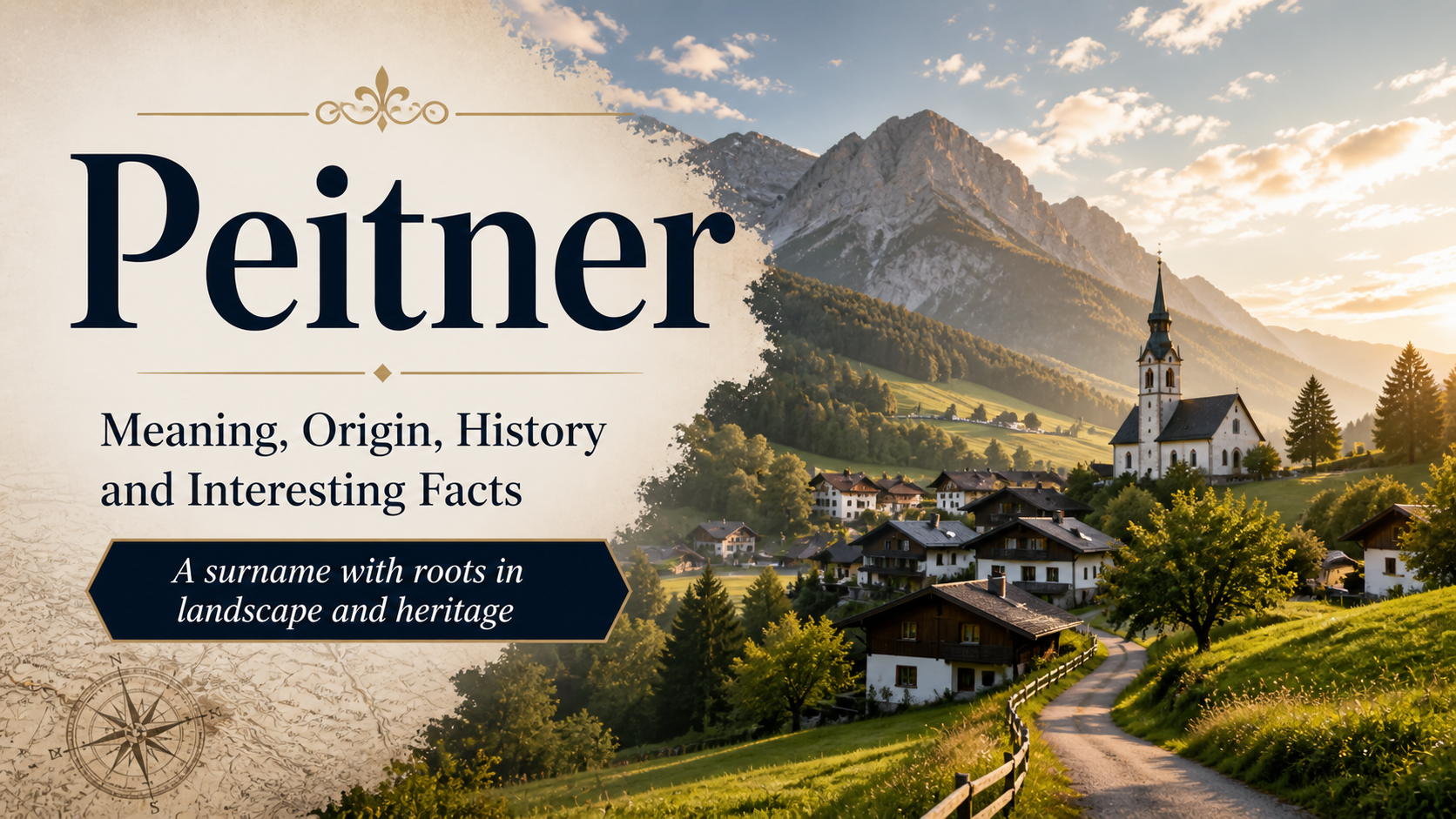
So… “Peitner.”
At first glance, it feels like one of those words you’re not entirely sure about.
Is it a brand? A place? A typo?
But no—it’s actually a surname. And not just any surname… it carries history, geography, even a bit of identity tied to landscapes and professions.
Let’s dig into it. Slowly.
What Does “Peitner” Mean?
The name Peitner comes from German-speaking regions—mainly Austria and Bavaria.
Historically, it’s considered a topographic surname, meaning it was based on where someone lived.
According to genealogical sources, the name refers to someone who lived:
- Near a mountain slope
- On a ridge or spur of land
- In slightly elevated terrain
Basically… not flat land.
It comes from old German words describing sloping or raised ground, combined with a suffix that means “a person from that place.”
So yeah, if your last name was Peitner centuries ago, chances are your family home had a view.
A Name Tied to Geography (Not Status)
Back then, surnames weren’t random. They were practical.
People were often identified by:
- Where they lived
- What they did
- Or who they were related to
And Peitner? It falls into the “where you lived” category.
Kind of like:
- Hill → Hillman
- Wood → Woods
- River → Rivers
Same idea… just in a Germanic context.
Peitner vs Peintner (Wait… What?)
Here’s where things get a bit messy—and interesting.
You might also see variations like:
- Peintner
- Peithner
- Peyntner
And these aren’t mistakes. They’re just historical spelling variations.
In fact, records show that Peintner was a noble family name in parts of Austria dating back centuries.
Different regions, different spellings… same roots.
And yeah, back then, spelling wasn’t exactly standardized.
The Peitner Name Through History
If you go way back—like medieval times—the name appears in:
- Local records
- Church registries
- Administrative documents
Some members of related families (like Peintner) even held roles such as:
- Innkeepers
- Local officials
- Administrative workers
Not royalty exactly… but definitely part of structured society.
And over time, the name spread—slowly, through migration.
Where Is the Name Found Today?
Even today, Peitner is still relatively rare.
But you’ll mostly find it in:
- Austria
- Germany
- Hungary (in some records)
It’s not one of those global surnames you hear everywhere.
Which… honestly, makes it more unique.
Peitner as a Family Name (Identity Matters)
Let’s step away from history for a second.
Because surnames aren’t just labels—they carry identity.
If your name is Peitner, it might connect you to:
- A specific region in Europe
- A shared ancestry
- A long chain of family stories
Even if you don’t know the full history… it’s there.
Kind of quietly sitting in your name.
Key Characteristics of the Name “Peitner”
Here’s a quick breakdown:
- Origin: Germanic (Austria/Bavaria)
- Type: Topographic surname
- Meaning: Person living near a slope or elevated land
- Variations: Peintner, Peithner
- Rarity: Relatively uncommon
Simple summary—but it tells a lot.
Table: Peitner Name Overview
| Aspect | Details |
|---|---|
| Name Type | Surname |
| Language Origin | German |
| Meaning | Resident near a mountain slope |
| Region | Austria, Bavaria |
| Variants | Peintner, Peithner |
| Historical Use | Geographic identification |
Why Names Like Peitner Still Matter Today
You might be thinking… okay, interesting—but why should I care?
Fair question.
Here’s why it matters:
1. It Connects You to the Past
Names like Peitner are basically living history.
They tell you where your ancestors might have lived… even centuries ago.
2. It Reflects Migration Patterns
As families moved across Europe (and later the world), names like this traveled too.
And sometimes changed slightly… but never completely.
3. It Adds Cultural Identity
Even today, a surname can hint at:
- Cultural background
- Language roots
- Geographic origin
And that’s… kind of powerful.
Common Misunderstandings About “Peitner”
Let’s clear up a few things.
Because confusion happens.
❌ It’s NOT a brand (usually)
Unless someone uses it as one—but originally, no.
❌ It’s NOT a modern invention
This name goes way back—centuries old.
❌ It’s NOT random
It has a clear meaning tied to geography.
Bullet Points: Quick Facts You Should Know
- The name comes from old German language roots
- It describes where someone lived—not what they did
- It has multiple spelling variations
- It’s relatively rare globally
- It has connections to Austria and Bavaria
- Some historical families with similar names had noble recognition
A Slightly Personal Take…
There’s something kind of nice about names like Peitner.
They’re not flashy. Not overly common.
But they carry depth.
You can almost imagine…
A small house on a hillside.
A quiet village.
Generations living in the same place.
And then—over time—moving, spreading, adapting.
All while keeping the name.
Final Thoughts (Keeping It Real)
So yeah… Peitner might seem like just another unfamiliar word at first.
But it’s not.
It’s a surname with roots, meaning, and history—tied to landscapes, people, and time.
And honestly…
That’s way more interesting than it looks.
Because sometimes, the simplest names carry the longest stories.